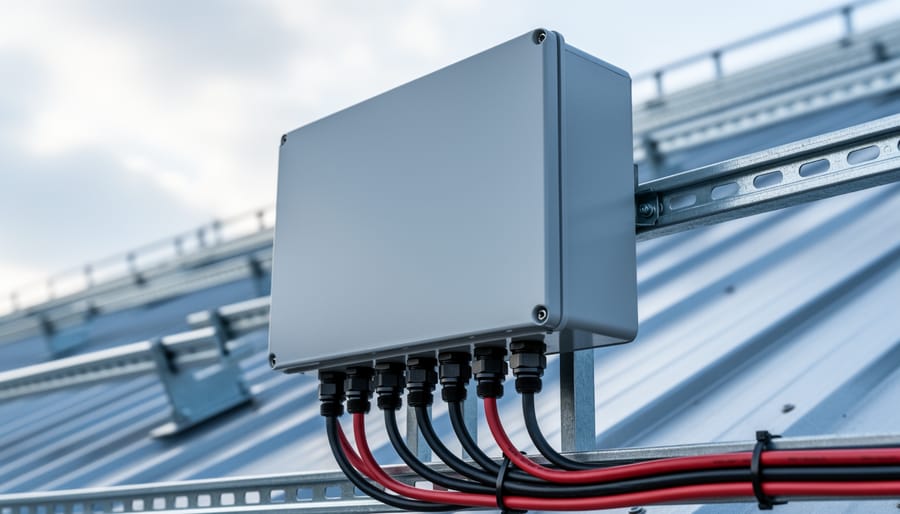
A solar PV combiner box gathers the output of several panel strings into one weatherproof enclosure, protects each string with fuses or breakers, and sends a single clean DC feed to your inverter or charge controller. Choosing the right one comes down to four steps: match the string count, size the fuse and breaker ratings, confirm the protection features, then check the enclosure rating and material.
In the interest of transparency, we earn a commission on some purchases made through links on this site. As an Amazon Associate I earn from qualifying purchases.
Think of it as the traffic controller of your array. Without one, a fault on a single string, whether an overload, a short circuit, or a lightning-induced surge, can ripple through the whole system. With one, the problem stays contained. Listings we reviewed, like the PV Combiner Box 4 String, pair 10A circuit breakers with a lightning arrester and IP65 waterproofing, which covers both on-grid and off-grid setups. The 6 String Metal Solar Combiner Box steps up to DC500V and 100A with a cold rolled steel casing and IP66 protection.
I’ve spent plenty of time crouched on rooftops and in sheds wiring these, and the pattern is clear: people overspend on features they don’t need or undersize the box they do. That’s why this guide walks through sizing, protection, and use cases before comparing eight specific boxes. Every kilowatt you harvest cleanly is a little less fossil fuel burned, and if you’re building your own knowledge alongside your system, a bit of renewable learning never hurts.
Ready to find the right fit? Let’s start with what actually matters when you buy.
What a Solar PV Combiner Box Actually Does
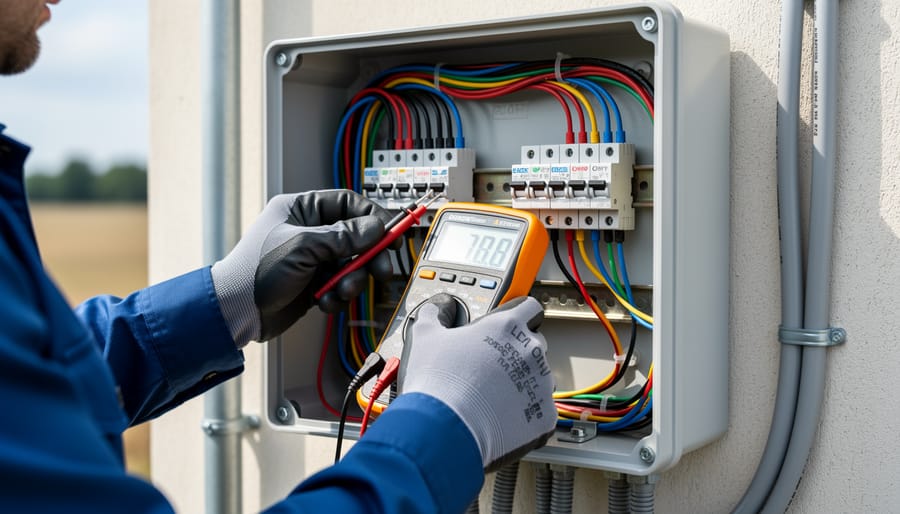
Picture your solar panels as several small streams, each carrying its own trickle of electricity. A combiner box is where those streams meet and merge into one steady river. It sits between the solar modules and the inverter, collecting the output of multiple strings and sending a single, tidy line onward. If you want a refresher on the bigger picture, our guide on how solar works covers the full journey from sunlight to household power.
A string is simply a group of panels wired together in series. Run several strings and you’d otherwise need several separate cables heading to the inverter, which gets messy fast. The combiner box brings them together inside one enclosure.
The box also acts as a bodyguard for your array. Listings for these products describe protection against overload, short-circuit, and surge, along with over-voltage protection. Here’s what the key parts do:
– Fuse: a small, sacrificial part that melts and breaks the circuit if too much current flows through a string.
– Circuit breaker: a switch that trips under overload and can be reset, which also lets you shut the output off for safe servicing.
– Surge protective device (SPD): a component that diverts sudden voltage spikes away from your equipment.
– Lightning arrester: a protector aimed at voltage surges from nearby lightning, which matters for exposed outdoor arrays.
When I’ve worked through a wiring job, the difference between a well-organized box and a cramped one is huge. Clear labeling, enough room for each string, and neatly arranged terminals turn a fiddly afternoon into a straightforward task. That’s especially true for solar outdoor wiring, where you’re often working in weather-exposed spots and want every connection easy to reach and double-check.
There’s an environmental payoff too. A protected array lasts longer, and every extra year your panels keep producing is another year of clean energy.
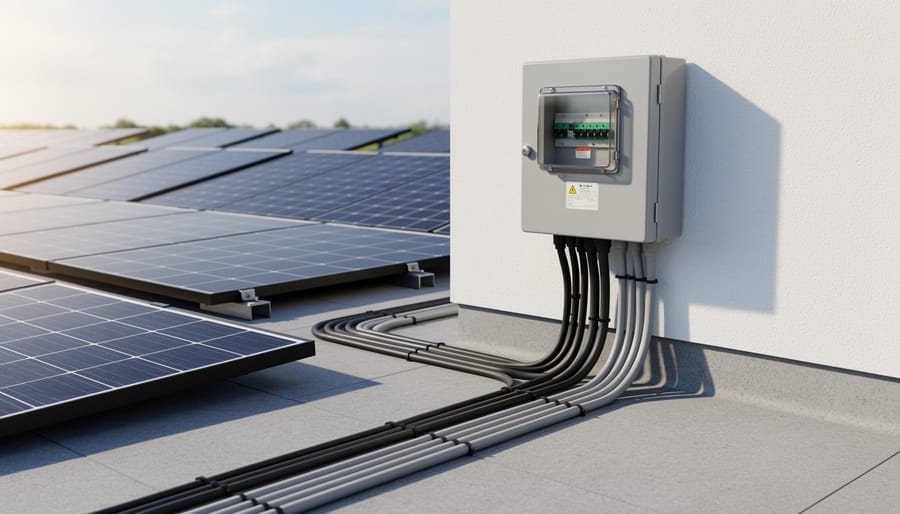
Key Buying Factors: Sizing, Protection, and Durability
String Count and Amp Ratings
Start with a simple count: how many strings of panels does your array have? Each string gets its own input on the combiner box, so that number sets your minimum. Then add headroom. If you might add panels in a year or two, buying a box with a spare input costs far less than swapping the whole thing later.
Next comes fuse sizing, and this is where the numbers matter. Each string needs its own fuse to protect against overload. Residential arrays commonly use 15A or 20A fuses per string, but the right value depends on your panel specs, so check the datasheet rather than guessing. The output breaker then handles the combined current leaving the box. Residential systems often pair a 60A or 100A output breaker with those string fuses. Larger commercial and ground-mount arrays step up to busbars rated roughly 200A to 600A.
Here’s a quick sizing checklist to run through before you buy:
- Number of strings, plus any you plan to add.
- Per-string current from your panel datasheet.
- Fuse rating matched to that string current.
- Output breaker rating that covers the combined strings.
- Voltage rating that suits your longest string.
- Spare inputs so you can expand without replacing the box.
Before you commit, confirm every figure against both your panel and inverter specs. A box that looks right on paper can still be wrong for your array if one rating is off.
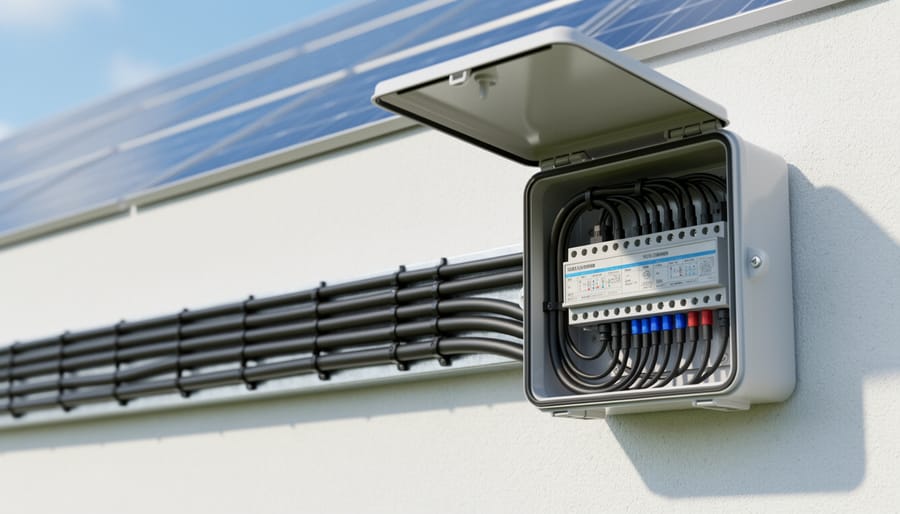
Surge, Overload, and Short-Circuit Protection
Think of the protection components in a combiner box as a team, where each member guards against a different problem.
Fuses and breakers handle overcurrent. A fuse in each string line blows if too much current flows, which can happen when a wiring fault sends current backward from healthy strings into a damaged one. The output circuit breaker plays a similar role downstream, tripping to cut the circuit if the combined current climbs too high. That covers overload and short-circuit protection, and a breaker has the bonus of being resettable rather than replaceable.
A surge protective device (SPD) deals with a different threat: sudden voltage spikes. Lightning strikes nearby or switching events on the grid can send a brief burst of excess voltage down your wiring, and the SPD diverts that energy away from your inverter. A lightning arrester serves a similar purpose, which is why several boxes in this guide list one. Exposed outdoor arrays, especially on open rooftops or ground mounts, are the ones that benefit most from this layer, since a single spike can damage expensive electronics.
Finally, check whether the box includes a disconnect switch. Some do, giving you a safe, visible way to isolate the array during maintenance. Others focus only on combining and protecting, so you’d add a separate disconnect elsewhere. Neither is wrong, but know which you’re buying before the wiring starts.
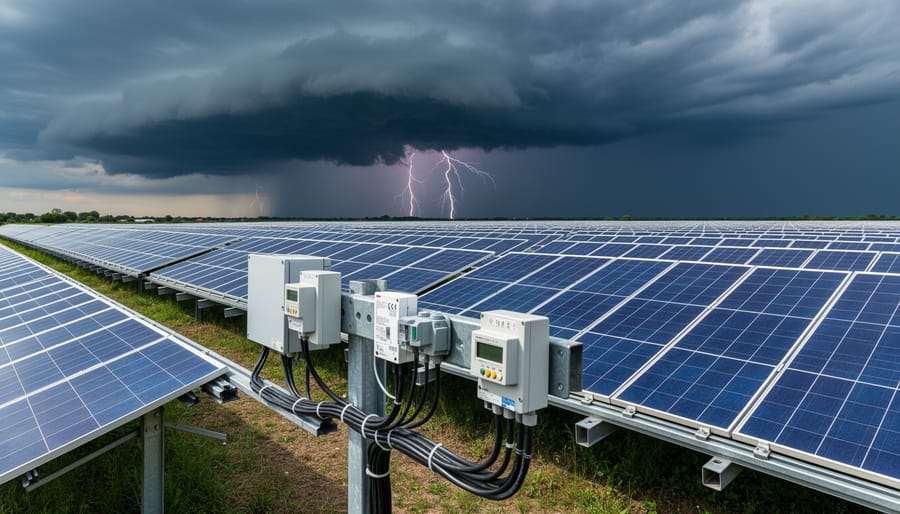
Waterproof Ratings, Enclosure Material, and Certifications
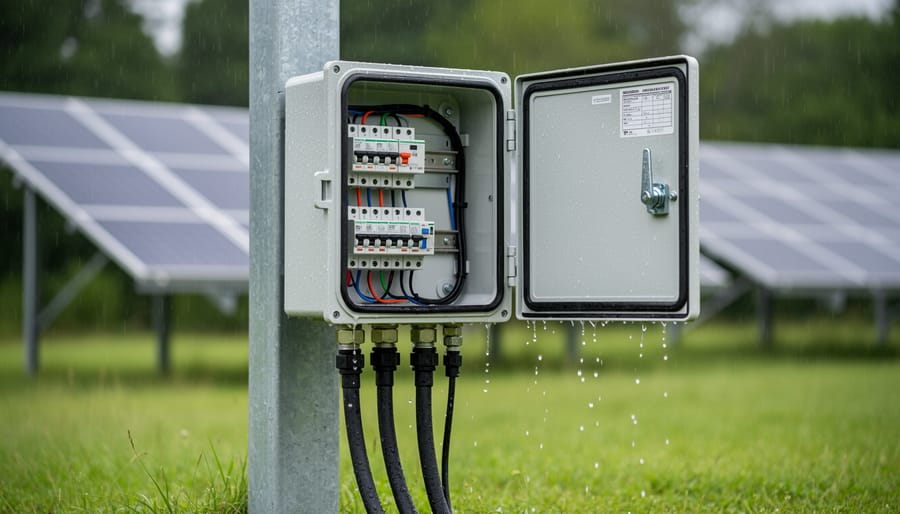
Your combiner box lives outdoors, so its weatherproofing matters as much as its fuses. The IP rating tells you how well the enclosure keeps out dust and water. Both IP65 and IP66 mean fully dust-tight. The difference is water: IP65 handles water jets from a nozzle, while IP66 handles more powerful jets. For most rooftop and wall-mounted installs, IP65 does the job. If your box sits somewhere exposed to driving rain or frequent hose-downs, IP66 is a nice extra layer of confidence.
Then there’s the enclosure material. Metal, such as cold rolled steel, is tough and durable, and it shrugs off knocks and sun exposure well. Plastic is lighter and easier to mount, which is handy for small wall-space jobs, but think about how much direct sun and heat the box will see. In my experience, picking the material that matches your climate and mounting spot saves headaches later.
Finally, look at certifications. Safety standards such as UL 1741 matter because inspectors and utilities often want to see equipment that meets recognized requirements before they sign off on an install. Listings don’t always spell out certification details, so check each product page carefully, and don’t assume a box is certified unless it says so. Confirm your local code requirements before you buy, since they vary by region.
Combiner Box Types Compared by Use Case
Not every solar setup needs the same box, and the easiest way to shop is to start with how you’ll actually use it. Here’s how the market breaks down.
Small systems usually call for a compact 1 or 2 string box. Think cabins, RVs, sheds, or a starter array where you’re combining very few strings, or just adding a fuse and disconnect to one. These are light, easy to mount, and cheap to wire up, but they leave little room to grow.
Mid-size 4 to 6 string boxes are the sweet spot for most homes and off-grid cabins. They handle a typical residential array with space left over for a couple of added strings later. Bentek combiner boxes are the name that keeps coming up for residential multi-string installs.
For bigger jobs, you’ll want heavier enclosures with larger busbars. Commercial rooftop and ground-mount arrays push more current, so the hardware has to be beefier. MidNite Solar’s combiner enclosures are the go-to category reference for commercial rooftops, while Outback Power FLEXware combiners are the one to know for off-grid, battery-tied systems.
| System type | Typical string count | Typical protection | Best-fit use |
|---|---|---|---|
| Small system | 1 to 2 | Fuse, breaker or disconnect, surge protector | Cabins, RVs, starter arrays |
| Residential | 4 to 6 | Fuses, circuit breaker, lightning arrester or SPD | Home rooftops with room to expand |
| Off-grid, battery-tied | Varies, often 4 or more | Breakers, surge protection, disconnect | Cabins and homes with battery banks |
| Commercial rooftop | Larger counts, heavier busbars | Higher-rated breakers and busbar protection | Large rooftop and ground-mount arrays |
Beyond string count, two design choices shape what you’ll get.
Plastic versus metal. Plastic enclosures are lighter and simpler to mount, which helps on a small wall or roof run. Metal enclosures, like the cold rolled steel casing on one 6-string listing rated IP66, tend to feel tougher and handle rough weather and heat better. If your box will sit in direct sun or a spot that takes a beating, metal is worth a look.
Breaker-included versus fuse-only. Some boxes pair per-string fuses with a main circuit breaker, which gives you protection and a built-in way to shut things off. Fuse-only designs keep things simpler and often lighter, but you’ll need a separate disconnect. Boxes with both give you overload, short-circuit, and surge protection in one tidy package, so there’s less to piece together.
Pick the type that matches your array today, then leave a little headroom for tomorrow.
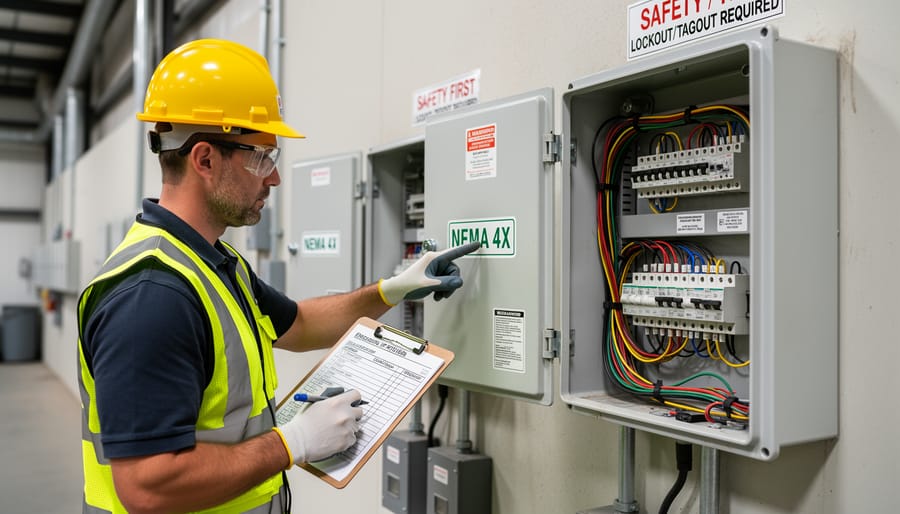
Our Top Picks: Eight Solar Combiner Boxes Reviewed
Choosing a combiner box gets easier once you sort the options by what actually matters. Here’s how I looked at each of the eight below: how many strings it handles, which protection features it includes (fuses, breakers, surge protection), what the enclosure is made of and how well it’s sealed, and how other buyers have rated it.
The picks run roughly from compact setups to larger arrays, so you can jump straight to the size that matches your system. I’ve stuck to what each listing actually states, with no prices and no made-up test numbers. Stock levels shift often, so check the current listing before you commit to anything.
2 String Solar PV Combiner Box IP65 2 in 1 Out DC500V 32A Circuit: A Compact Pick for Small Systems

If you’re running just two strings of panels, this compact box is built for exactly that job. It uses a 2-in, 1-out layout: two string inputs merge into a single output heading toward your inverter or charge controller. Think of it as the tidy little hub for a starter array.
On the protection side, the listing includes a 32A circuit breaker, a surge protector, and a 15A PV fuse, plus a solar disconnect switch you can flip when you need to isolate the array. It carries an IP65 rating, which means it’s sealed against dust and water jets, so it’s designed for outdoor mounting. The DC500V rating is a good thing to check against your string voltage before you buy, since your open-circuit voltage needs to stay comfortably under it, especially on cold mornings when panel voltage climbs.
Shoppers seem happy with it too: it holds a 4.8 out of 5 rating from 43 customer ratings, and it’s currently in stock.
Who is it for? Small two-string setups like a cabin, a shed, a workshop, or a first home-solar experiment. The trade-off is simple. With only two inputs, there’s almost no room to grow. If you suspect you’ll add a third string later, you’d be buying twice, so look at the four- or six-string options below instead. For a system you know will stay small, though, this is a neat, protected, no-fuss choice.
6 String Metal Solar Combiner Box: Room to Grow in a Metal Enclosure

If you’re planning a bigger array, or you know you’ll keep adding panels over the years, a six-string box gives you real breathing room. The 6 String Metal Solar Combiner Box packs six string inputs into one enclosure, so you can start with a few strings and fill the rest later without swapping out hardware. If you’ve only dabbled in camping solar so far, this is the step up that suits a full home system.
The listing calls out a 20A rated current fuse, a surge protective device, and a 63A air circuit breaker. That combination covers overload, short-circuit, and surge protection in a single box, which is exactly what you want between your modules and the inverter.
The metal enclosure is a practical perk. Metal tends to stand up well to sun, knocks, and weather over the long haul, which matters when the box lives outdoors year after year. Just remember that metal isn’t a substitute for sizing things right.
Fuse sizing is the part people rush. A 20A fuse only makes sense if your panels’ specs support it, so check each string’s ratings before you wire anything. Residential strings often land at 15A or 20A, but your panels decide the answer.
Customers have rated it 4.6 out of 5 from 91 customer ratings, and it’s currently in stock.
PV Combiner Box 4 String: IP65 Protection for On-Grid and Off-Grid Setups
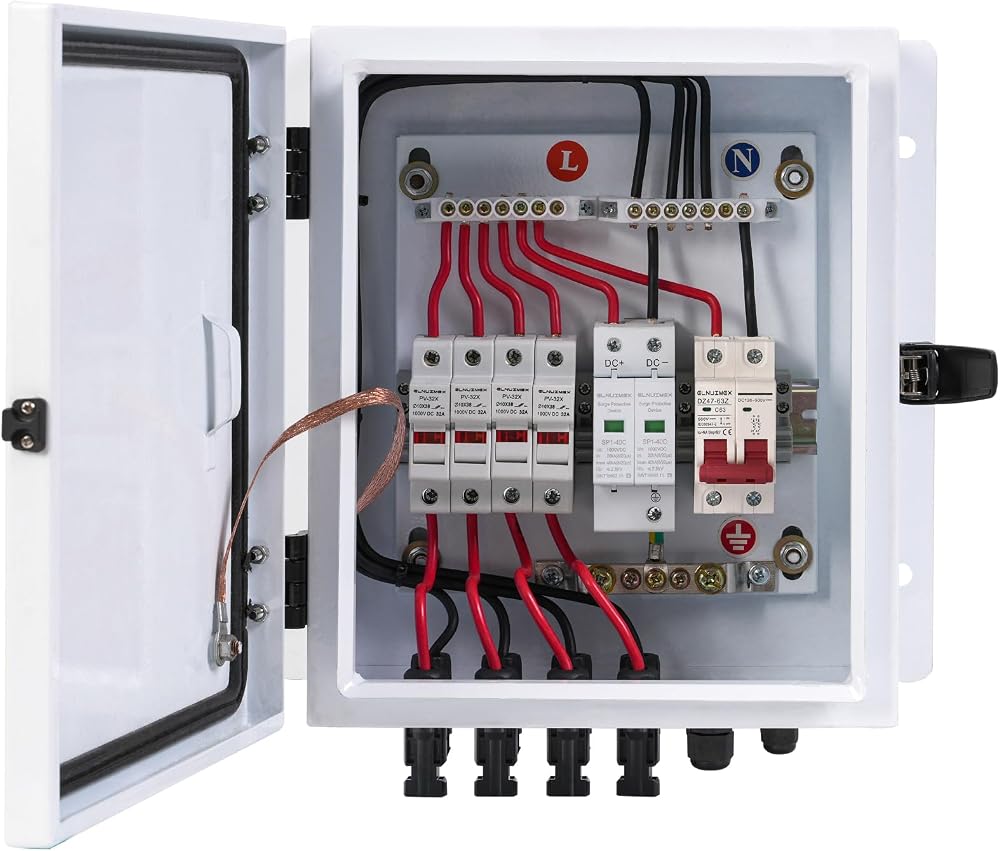
If you want a combiner box that works for a grid-tied house or an off-grid cabin, the PV Combiner Box 4 String is a flexible place to start. Four strings is a sweet spot. It’s enough to handle a typical home array without the bulk, cost, and extra wiring of a six-string unit, yet it leaves a little room to add a string later.
Here’s what’s on the listing. It’s an IP65 waterproof box with a metal enclosure, which means it’s sealed against dust and water jets and sturdy enough for outdoor mounting. It includes a lightning arrester for surge protection, a 20A rated current fuse, and circuit breakers. Pairing a fuse and breakers means you get overload and short-circuit protection in one tidy package, and the arrester adds a safeguard against surges in exposed locations.
That 20A fuse rating lines up with the per-string sizing many residential arrays use, but always check it against your own panel specs before you buy. Mismatched fuses are one of the easiest mistakes to make.
Because the listing calls out both on-grid and off-grid use, it suits readers who might start with a simple cabin setup and expand later, or who just want a box that won’t lock them into one configuration.
Customers rate it 4.4 out of 5 from 60 ratings, and it’s currently in stock. Think of it as a dependable middle-of-the-road choice: not the smallest, not the biggest, but well matched to a lot of real-world homes and cabins.
SoldonSUN Midnite Solar Photovoltaic Combiner: A Name Trusted in Compact Combining

The SoldonSUN Midnite Solar Photovoltaic Combiner (model MNPV3) is a 3-position unit from the MidNite Solar line. That brand shows up again and again in conversations about commercial rooftop arrays and professional-style installs, which gives this compact box a bit of a “pro look” even when you’re wiring a modest system.
So who is a three-position combiner for? Anyone running exactly three strings. If your array splits neatly into three, you get a clean, recognizable layout where each string has its own landing spot and nothing is crammed or improvised. That tidiness pays off later. When you or an electrician opens the box to troubleshoot, you can trace each string at a glance instead of untangling a pile of wires.
It also makes a nice middle step. A single or two-string box can feel limiting, while a six-string enclosure is overkill if you’ll never grow past three. Matching the box to your real string count keeps the wiring simple and the footprint small.
Customers rate it 4.4 out of 5 from 88 customer ratings, a solid showing for something this focused. One practical note: only 3 are left in stock, so availability is limited. If a three-string combiner fits your plans, check the current listing soon rather than waiting.
PV Combiner Box 6: Lockable Six-String Option With Surge Protection

Planning wall space is easier when you know the footprint, and this box lists its dimensions at 10.6 x 5.9 x 15.35 inches. That’s compact enough for most utility walls, but leave extra room around it so the door swings fully open and you can reach the wiring.
This six-string unit pairs a surge protective device with a circuit breaker, and it comes with an outdoor solar disconnect switch aimed at grid-tied panel systems. Six strings gives you room for a mid-size array or a few spare inputs if you add panels later.
The standout feature is the combination lock. If your system sits somewhere other people can wander by, like a shared yard, a rental property, a school, or a farm outbuilding, a lockable enclosure keeps curious hands off live DC wiring. It’s a simple safety upgrade, and you won’t have to improvise a padlock setup yourself. Just remember a lock doesn’t replace good housekeeping, so it’s smart to periodically inspect connections and the enclosure seals once you’ve opened it.
A word of caution on the reviews. This box shows a perfect 5 out of 5, but that comes from only 1 customer rating. One happy buyer is encouraging, not conclusive, so treat the score as a starting point and lean on the specs instead. Stock is limited too, with only 16 left, so check the listing if this one fits your plans.
1 in 1 Out Solar Combiner Box: Simple Protection for Single-String Systems

A single string doesn’t really need a true combiner. It needs a fuse and a way to disconnect, and that’s exactly what the 1 in 1 Out Solar Combiner Box delivers. This IP65 disconnect switch box is rated 20A and 500V, and it packs a 20A PV fuse, a DC 20A circuit breaker, and a surge protector into one enclosure that’s rated for indoor or outdoor mounting.
Think of it as a protective gate more than a merging hub. With only one string coming in, there’s nothing to combine. What matters is stopping an overload, cutting power when you need to work on the system, and shielding your gear from surges. The disconnect gives you a safe way to isolate the string, which makes everything else easier.
Who does this suit? Small cabins, RVs, and starter systems are the natural fit, anywhere a single string of panels feeds a charge controller or small inverter. It’s a tidy way to add real protection without paying for string capacity you’ll never use. If you expect to add strings later, a larger box with spare positions will serve you better.
Because the box has a disconnect, it also makes routine upkeep simpler. Pairing it with a habit of basic solar panel maintenance keeps a small rig healthy. Whether you reach for a cleaning brush on an RV roof or eye a solar cleaning robot for something bigger, you can switch the string off first.
Customers rate it 4.8 out of 5 from 24 customer ratings, and it’s currently in stock.
Solar Combiner Box 4 String PV Combiner Box 1000V DC 40A & 20-40KA: Higher Voltage Headroom for Off-Grid Systems

This 4-in, 4-out box is built as a power distribution box for off-grid systems, and its headline numbers are 1000V DC and 40A. Four strings come in, four come out, and the whole unit is rated for a higher voltage than many compact combiners you’ll run into.
Why does the voltage rating matter? When you wire panels in series, their voltages add up. A longer series string pushes the total higher, so a 1000V DC rating gives you real breathing room if you plan to connect more panels per string. That headroom is handy for off-grid setups that grow over time. Just check your panels’ open-circuit voltage against the box rating before you buy, since cold weather can push string voltage above what the label on the panel suggests.
The other number worth understanding is the 20-40KA surge protective device (SPD). The “kA” stands for kiloamps, which is simply a measure of how much surge current the protection can handle (one kiloamp is 1,000 amps). In a storm-prone area, a lightning strike nearby can send a brutal spike down your wiring. A higher kA rating means the SPD is built to take a bigger hit before it gives out, which helps keep your charge controller and inverter safer.
Customers rate this one 4.5 out of 5 from 25 customer ratings, and it’s currently in stock. For a remote cabin or off-grid homestead with a four-string array, it’s a sensible, sturdy option.
4 String Solar Combiner Box: A Lightweight Plastic Enclosure With 63A Breaker

The 4 String Solar Combiner Box is the lightweight take on the four-string format. It’s a plastic enclosure with an IP65 waterproof rating, designed for both on-grid and off-grid solar systems. Inside, you get a lightning arrester, a 15A rated current fuse, and a 63A circuit breaker. That means overload, short-circuit, and surge protection in one tidy package.
Customers rate it 4.3 out of 5 from 75 customer ratings, and it’s currently in stock.
The real story here is plastic versus metal. Compared with the metal four-string option, a plastic shell is generally lighter, which makes it easier to hold in one hand while you line up mounting holes on a wall, post, or rack. That’s a real perk if you’re working alone on a ladder. Plastic also won’t conduct electricity or rust, which is nice in damp spots.
Sun exposure is where I’d think twice. A plastic box in direct, all-day sun can run hotter than you’d like, and long-term UV exposure is tougher on plastic than on steel. If you can, mount it in a shaded spot, such as under an eave or behind the array, and check the seals and cable entries periodically.
Metal gives you a sturdier, more heat-tolerant shell, while plastic wins on weight and easy handling. For a shaded, sheltered install on a home or cabin system, this one is a practical, budget-friendly-feeling choice.
Quick Comparison: Which Box Fits Which System
Here’s the whole lineup in one glance. I’ve kept this to details pulled straight from the listings, so a blank spot means the listing didn’t say rather than that the feature is missing.
| Product | Strings | Key protection and ratings | Enclosure and rating | Customer rating | Best for |
|---|---|---|---|---|---|
| 2 String Combiner Box | 2 in, 1 out | DC500V, 32A breaker, surge protector, 15A PV fuse | IP65 | 4.8 (43 ratings) | Small systems |
| 6 String Metal Combiner Box | 6 | 20A fuse, surge protective device, 63A breaker | Metal | 4.6 (91 ratings) | Residential expansion |
| PV Combiner Box 4 String | 4 | Lightning arrester, 20A fuse, circuit breakers | Metal, IP65 | 4.4 (60 ratings) | On-grid or off-grid homes and cabins |
| SoldonSUN Midnite Solar MNPV3 | 3 | Details not listed here | Not listed here | 4.4 (88 ratings) | Tidy three-string layouts |
| PV Combiner Box 6 | 6 | Surge protective device, circuit breaker, outdoor disconnect switch | Lockable | 5.0 (1 rating) | Lockable outdoor mount |
| 1 in 1 Out Combiner Box | 1 | 20A fuse, 20A DC breaker, surge protector, 500V | IP65 | 4.8 (24 ratings) | Cabins, RVs, starter systems |
| 4 String, 1000V DC 40A | 4 in, 4 out | 1000V DC, 40A, 20-40KA surge protective device | Not listed here | 4.5 (25 ratings) | Off-grid systems |
| 4 String Plastic Combiner Box | 4 | Lightning arrester, 15A fuse, 63A breaker | Plastic, IP65 | 4.3 (75 ratings) | Lightweight on-grid or off-grid builds |
A few quick takeaways from the grid. If you only have one or two strings, the compact IP65 boxes at the top keep things simple. Planning to add panels later? The six-string options give you the most headroom, and the lockable one suits sites where curious hands might wander by.
Keep in mind that the single 5.0 rating comes from just one customer, so weigh it lightly next to boxes with dozens of reviews. Whichever you choose, double-check the fuse and breaker numbers against your own panel and inverter specs before you buy.
Common Mistakes to Avoid When Buying and Installing
Let’s save you from the slip-ups that trip up a lot of first-time solar installers. None of these are hard to avoid once you know to look for them.
Buying a box with no room to grow. Solar systems have a way of expanding. If you pick a box with exactly the number of inputs you need today, adding panels later means replacing the whole enclosure. A six-string box on a four-string array is cheap insurance.
Mismatching fuses to panel specs. A fuse that’s too large won’t protect your wiring, and one that’s too small will blow for no reason. Check your panel’s maximum series fuse rating and size each string fuse to match, rather than grabbing whatever a listing happens to include.
Ignoring voltage ratings on long strings. Wire panels in series and the voltage climbs fast. A box rated DC500V is fine for a short string, but longer ones may call for something closer to the 1000V DC class. Add up your string’s open-circuit voltage, with a margin for cold mornings, before you buy.
Skipping surge protection. If your array sits out in the open or you live where thunderstorms roll in, a surge protective device or lightning arrester earns its keep many times over.
Mounting in direct sun. Heat shortens component life. A shaded wall is a better home than a south-facing bracket, and it matters most with plastic enclosures.
Overlooking certifications and code. Check each listing’s certification details and confirm what your local code requires. Don’t assume.
Trusting a perfect score from one review. A 5.0 from a single rating tells you almost nothing. A 4.6 from dozens of ratings is usually a stronger signal.
One last tip from the install side: once the box is up, put a reminder in your calendar to inspect it a couple of times a year. Look over the seals and gaskets for cracks, and check that connections are snug and free of corrosion. A few minutes of checking keeps your clean energy flowing for years.
Solar Combiner Box FAQs
Short answers to the questions readers ask us most often about combiner boxes.
Do I need a combiner box for my solar system?
If your array has two or more strings feeding one inverter or charge controller, a combiner box is the tidy, protective way to merge them into a single output. A single-string system can often get by with just a fuse and a disconnect, though many people still choose a compact 1-in, 1-out box for the added surge protection.
What size fuse goes in a combiner box?
Residential arrays commonly use 15A or 20A fuses per string, paired with a 60A or 100A output breaker. Always confirm the exact number against your panel’s specs and your inverter’s requirements, since an oversized fuse won’t protect the wiring and an undersized one will blow needlessly.
What does IP65 mean?
It’s an ingress protection rating. The 6 means the enclosure is dust-tight, and the 5 means it can handle low-pressure water jets from any direction, which suits most outdoor mounting. IP66 steps up to stronger water jets, so it’s a bit more forgiving in harsh weather.
Can I install a combiner box myself?
Handy DIYers do install them, but you’re working with DC wiring that stays live whenever the sun is out. Check your local electrical code, find out whether your area requires a permit or licensed electrician for the connection, and when in doubt, bring in a pro for the final hookup.
What’s the difference between a combiner box and a disconnect switch?
A combiner box merges multiple strings into one output and protects each with fuses or breakers. A disconnect switch simply lets you cut the circuit for maintenance or emergencies, though some combiner boxes, like several we reviewed above, build one right in.
Still weighing your options? Match the answers above to your string count and mounting spot, and the right box usually becomes pretty clear.
Choosing a solar combiner box really comes down to four steps. Count your strings first, and leave a spare input or two if you might expand later. Next, size your fuses and breakers to your panel and inverter specs, so the box protects your wiring without nuisance trips. Then pick the protection features that fit your site: surge protection and a lightning arrester matter most on exposed roofs and in storm-prone areas, and a disconnect switch makes maintenance safer. Finally, match the enclosure to where it will live, weighing IP rating, metal versus plastic, and how much direct sun it will see.
From there, the eight boxes we covered make the decision easier. The compact 1 and 2 string boxes suit small cabins, RVs, and starter systems. The 4 and 6 string options give homes and off-grid setups room to grow. The higher-voltage four-string box is worth a look if you run longer series strings. Check current listings before you buy, since stock changes, and confirm your local code requirements.
Here’s what I love most about this part of solar. A combiner box is a small, quiet piece of hardware, yet it protects the panels that turn sunlight into clean energy day after day. Get it right, and your array can keep producing for years with fewer headaches and a lighter footprint on the planet.
Ready for your next project? Explore more SolariFlex guides and keep building a brighter, greener setup.
